SPISE 2026
Guiding Sustainable Transitions with Sensory Evaluation
Summer Program in Sensory Evaluation 2026
July 27 – August 1, 2026 |
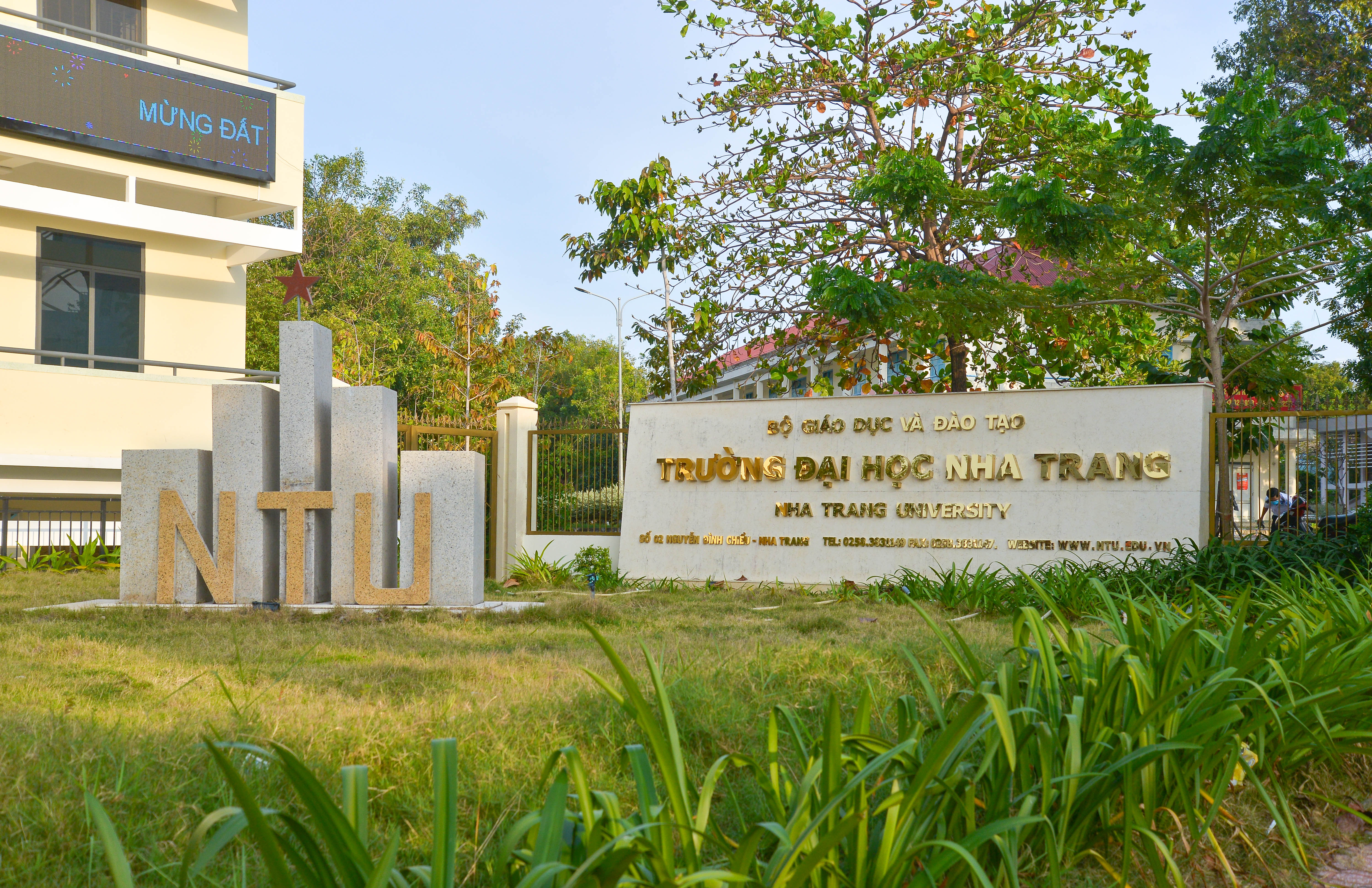
Nha Trang University, Vietnam
Days
Hours
Minutes
Seconds
FIRST ANNOUNCEMENT
SPISE 2026 explores how sensory evaluation can bridge the gap between sustainability goals and consumer behavior.
Main Conference Topics
The conference focuses on the following cutting-edge topics in quality management and food safety
Methodological Innovations
Sustainable Food Systems
Sensory Nutrition and Health
Hands-on Workshops
True to the SPISE tradition, the symposium will be preceded by two hands-on workshops designed to provide advanced methodologies and practical skills
Building and Using Psychometric Scales to Understand and Drive Sustainable Consumer Behavior
This workshop provides a technical framework for measuring sustainable food behaviors by bridging psychometric theory with multidimensional data analysis. It focuses on the Item Response Theory (IRT) framework to model consumer engagement as a latent variable.
Scale Construction & Item Analysis
The program begins with Item Engineering, focusing on the ideation of operational sustainability constructs.
IRT Modeling
- Parameter Estimation: Calculation of item discrimination and difficulty/threshold
- Scale Information: Evaluating the Test Information Function (TIF) to identify the range of the latent trait where the scale is most precise
- Measurement Invariance (DIF): Statistical detection of Differential Item Functioning to ensure the scale remains invariant across demographic groups (e.g., age, gender, or income)
Advanced Segmentation & Framework
To identify heterogeneous behavioral patterns, we apply Latent Class Analysis (LCA). This allows for the classification of individuals into discrete profiles based on their response probabilities.
Methodological Comparison
- IRT vs. MCA: Contrasting the probabilistic frame of IRT with the geometrical frame provided by Multiple Correspondence Analysis
- Synergy: Utilizing MCA to project and interpret the latent classes identified via IRT within a factorial space
Software Implementation & Visualization
The workshop utilizes a hybrid software ecosystem to ensure reproducibility:
What You Will Gain
Participants will leave with a validated workflow for constructing, testing, and applying psychometric scales to food research.
Applying Sensory Evaluation in Quality Control
This hands-on workshop will equip participants with foundational theory and practical tools needed to integrate sensory evaluation into food quality management systems in the food industry.
Workshop Objectives
This hands-on workshop will equip participants with foundational theory and practical tools needed to integrate sensory evaluation into food quality management systems in the food industry. Through lectures, demonstrations, and interactive exercises, attendees will gain practical competencies to design, conduct, and interpret sensory tests for real-world quality control challenges, including:
Workshop Agenda
Fundamentals of Sensory Evaluation
Good Practices & Foundation- Human senses & sensory attributes — How humans perceive flavor, aroma, texture, and appearance; recognizing sensory thresholds
- Biases and Test control
PTC Demo
Free design and evaluation of the sensory quality of a product with off-flavors
Difference Testing
Methods & Applications- Overview of difference testing
- Difference testing methods: simple difference, directional, difference from a control, and their applications
- Introduction to paired comparison and BT model
- Introduction to subjects and products covariables
- Incomplete cyclic design and experimental design for paired comparison
- Unfolding analysis for paired comparison
- Case study with analysis on R software
Test selection
Difference tests
Descriptive Analysis
Profiling & Characterization- Overview of sensory descriptive analysis: conventional versus rapid profiling methods
- Conducting conventional descriptive analysis
Descriptor generation
Profiling quality standards and test samples
Other Techniques & Emerging Tools
Shelf-life & AI Integration- Difference from control
- Ins/Outs methods
- Design of shelf-life research
AI for study designs for sensory shelf-life testing
Protocols to implement sensory QC in a big vs. small company
Key Highlights
Symposium Program
Tentative program — July 30–31 & August 1, 2026
- Takasago Presentation
- Tate & Lyle presentation
- Suntory Beverage and Food Asia
Key Dates & Deadlines
Mark your calendar with these important dates for SPISE 2026
30
Abstract Submission Deadline
Submit your abstract for consideration in the conference program
30
Full Paper Submission
Submit your complete research paper for publication
30
Early Bird Registration
Register early to secure your spot at discounted rates
15
Standard Registration Deadline
Last chance to register for the conference
Keynote Speakers & Committee
Meet our distinguished speakers and committee members

Prof. Hildegarde Heymann
University of California, Davis, USA
Distinguished Professor. Keynote Speaker.

Prof. Jeehyun Lee
Pusan National University, Korea
Professor. Keynote Speaker.

Dr. Yuko Kusakabe
National Agriculture and Food Research Organization
Dr. Keynote Speaker.

Mrs. Le Thi Nga
Deputy CEO, Chief R&D Officer - Research & Development Center, Masan Consumer Corporation
Mrs. Keynote Speaker.

Mr. Khin Wai Ho
Corporation R&D Senior Director of Takasago International (Singapore) Pte Ltd
Assoc. Prof. Keynote Speaker.

Mrs. Pham Thi Thanh Phuong
Vice President – Head of Product Development – Suntory Beverage and Food Asia
Dr. Keynote Speaker.
Abstract Submission
We invite researchers, academics, and industry professionals to submit abstracts for SPISE 2026.
Submit Your Abstract
Click the link below to submit your abstract for consideration in the SPISE 2026 conference program. All abstracts will be reviewed by the scientific committee.
Download the official abstract template to ensure your submission meets all formatting requirements.
You will be redirected to a secure Google Form to complete your submission.
Registration Fees
Join us at SPISE 2026. Early bird rates available.
| Category | Early Bird (Before May 30) |
Standard (May 30 – July 15) |
|---|---|---|
| Symposium: Industry | US$150 / VND 4,000,000 | US$200 / VND 5,200,000 |
| Symposium: Academia/Government | US$120 / VND 3,200,000 | US$150 / VND 4,000,000 |
| Symposium: Student/Postdoc | US$50 / VND 1,300,000 | US$70 / VND 1,800,000 |
| Gala Dinner (July 31) | US$35 / VND 900,000 | US$50 / VND 1,300,000 |
| Workshop Basic (Jul 27-28) | US$310 / VND 8,000,000 | US$360 / VND 9,400,000 |
| Workshop Advanced (Jul 29-30) | US$360 / VND 9,400,000 | US$410 / VND 10,800,000 |
* Workshop fees include full access to the symposium sessions.
Contact & Registration
Contact us for more information about the conference and submit your paper.
Contact Information
Phone
+84 918 029 190
spise@hcmut.edu.vn
Address
268 Ly Thuong Kiet Street, Dien Hong, Ho Chi Minh city, Vietnam.

Secretariat
Dr. Hien Thi Nguyen
HCMUT, Vietnam

Secretariat
Dr. Phan Thi Khanh Vinh
NTU, Vietnam

Secretariat
MSc. Đo Thi Thanh Thuy
NTU, Vietnam
Online Registration
Please complete the official registration form via Google Forms to confirm your participation.
Fill Registration Form